
Virus and Malware Removal Help in Milwaukee
Pop-ups, browser redirects, unfamiliar programs, false security warnings, or unexpected remote access can leave you uncertain whether your Windows computer and personal information are safe.
I’m John Zettel, the owner and technician at PCRuns. I help Milwaukee-area homeowners and small businesses evaluate suspected malware, remove identified unwanted software, repair related Windows problems, and improve practical security afterward.
You will work directly with me. I will explain what I find, what cannot be determined with certainty, and the available options before beginning paid work.
Milwaukee-area computer service is available by appointment. If money or an online account may be at risk, contact the appropriate bank, card issuer, or account provider immediately from a trusted device.
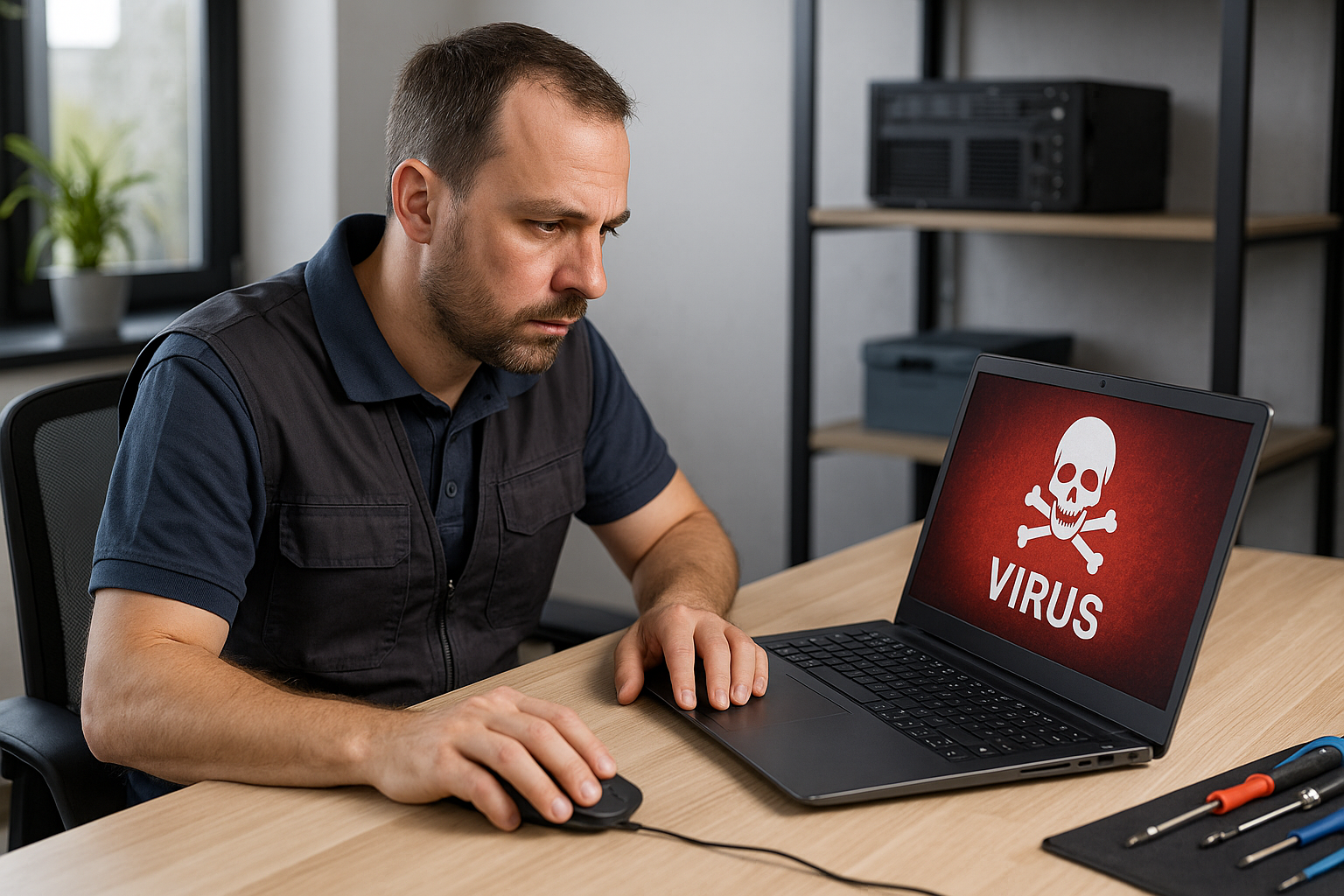
Signs That Your Computer Should Be Evaluated
These symptoms can be caused by malware, but they can also result from browser settings, legitimate software, damaged Windows files, failing hardware, or misleading website notifications. Evaluation helps determine the most reasonable response.
Persistent Pop-Ups
Advertisements, fake infection warnings, subscription notices, or browser notifications continue appearing even when you try to close them.
Browser Redirects
Searches go to unfamiliar websites, the home page changes, unwanted extensions appear, or browser settings will not remain corrected.
Unknown Programs or Activity
Unfamiliar applications, startup items, remote-access tools, security exclusions, or background activity appear without a clear explanation.
Security Tools Are Disabled
Windows Security, the firewall, updates, or other protections will not start, cannot update, or appear to have been changed unexpectedly.
Scammer Accessed the Computer
A caller, email, or pop-up persuaded you to install remote-control software, reveal information, make a payment, or allow someone into the computer.
Files or Windows Are Affected
Files have changed or become inaccessible, Windows behaves unpredictably, or the computer no longer starts normally after suspicious activity.
What to Expect
Describe What Happened
Tell me what you observed, when it began, and whether anyone remotely accessed the computer or obtained money, passwords, or personal information.
Evaluate the Computer
I will examine relevant programs, browsers, startup items, security status, Windows condition, and other evidence connected to the symptoms.
Review the Options
I will explain whether cleanup, file protection, Windows repair, reinstallation, account action, or another response appears most appropriate.
Approve the Work
You decide whether to proceed after we discuss the expected work, cost, data risks, limitations, and any actions you should take yourself.
If a Scammer Had Remote Access
Disconnect the affected computer from the internet and stop communicating with the scammer. From a different trusted device, contact any affected financial institution, card issuer, or payment service. Secure the email account first, then other important accounts, using new and unique passwords.
Computer cleanup cannot reverse a payment or prove that information was never copied. Review recent account activity, remove unknown recovery methods and active sessions, and enable multifactor authentication where available.
Possible Virus and Malware Solutions
Remove Identified Threats
I can use appropriate security tools and manual inspection to remove identified malware, unwanted applications, deceptive browser extensions, suspicious startup items, and remote-access software connected to the incident.
Repair Browser and Windows Changes
Cleanup may include correcting browser settings, restoring appropriate security settings, applying supported updates, and repairing Windows components damaged or changed during the incident.
Protect Accessible Files
When important files are at risk and the storage device remains readable, backup or recovery may need to be considered before major repair or reinstallation work. No backup or recovery attempt can guarantee every file.
Reinstall Windows When Necessary
If Windows is seriously damaged or continued trust in the existing installation is uncertain, a clean installation may be safer than repeated cleanup attempts. Applications must normally be reinstalled, and data risks should be discussed first.
What Malware Cleanup Can and Cannot Establish
Security scans and inspection can identify many known threats and suspicious changes, but no technician or security product can prove that every possible malicious file, past action, copied credential, or hidden change has been found.
- Removing detected malware does not undo information already disclosed or copied.
- A clean scan does not guarantee that an online account was never accessed.
- Encrypted, deleted, or damaged files may not be recoverable.
- Severely compromised Windows installations may be safer to replace than repair.
- No cleanup can prevent every future infection, scam, or unsafe decision.
I will explain the available evidence and recommend the most practical response without claiming certainty that the evidence cannot support.
Evaluation, Cost and Turnaround
Free Initial Evaluation
Start by describing the symptoms and any event that may be connected. I will evaluate the computer and explain the likely next step. If extensive scanning, cleanup, backup, recovery, repair, or installation would involve a charge, I will discuss it before proceeding.
Realistic Turnaround
Most service requires at least two days. Extensive scans, damaged Windows files, file backup, failing storage, account-security steps, workload, or replacement-part availability may extend the timeline.
I will provide the most realistic estimate I can after evaluating the computer rather than promising completion before the problem is understood.
30-Day Limited Workmanship Guarantee
PCRuns stands behind the repair work it performs for 30 days after the serviced equipment is returned to the customer. If the same problem returns because of the workmanship performed by PCRuns, I will inspect the equipment and correct the covered workmanship without an additional labor charge.
This limited workmanship guarantee does not cover unrelated or newly developed problems, malware or reinfection, scams, compromised online accounts, customer-made software or hardware changes, normal wear, hardware failure, physical damage, misuse, data loss, or problems caused by customer-supplied parts.
Security software, online accounts, Windows updates, third-party applications, data recovery, and replacement parts remain subject to their respective providers, developers, manufacturers, or sellers.
Your Files, Accounts and Privacy
I use only the access reasonably needed to evaluate the problem and perform the work you approve. Some cleanup or testing may require a Windows password or access to an affected browser or account. I will explain why access is needed.
Whenever practical, enter sensitive online credentials yourself. If another person may have obtained a password, change it from a trusted device. Avoid sending passwords or verification codes through ordinary email.
Frequently Asked Questions
Does a pop-up prove that my computer has a virus?
No. Some pop-ups are deceptive website notifications or advertisements rather than installed malware. Browser settings and extensions should be examined before assuming the entire computer is infected.
Can you guarantee that every virus will be removed?
No responsible technician can guarantee detection of every possible threat. If the computer cannot be trusted after evaluation and cleanup, protecting appropriate files and reinstalling Windows may be the safer recommendation.
Will virus removal erase my files?
Routine cleanup is intended to preserve personal files, but damaged storage, malicious encryption, Windows corruption, or a necessary clean installation can place data at risk. Important files and backup options should be discussed before major work.
Should I keep paying for a third-party antivirus?
Not necessarily. For many home users, properly functioning Windows Security, supported updates, careful browsing, unique passwords, multifactor authentication, and dependable backups provide a practical foundation. Your individual requirements may differ.
Can files encrypted by ransomware always be recovered?
No. Recovery depends on the ransomware, available backups, the condition of the storage device, and whether a legitimate recovery method exists. Do not assume that paying a ransom will restore the files or prevent misuse of copied information.
What should I bring with the computer?
Bring the charger or power adapter with a laptop. Also provide a clear description of what happened, any suspicious message or phone number, software installed during the incident, and whether important files or accounts may be at risk.
Related PCRuns Services
Security and Recovery
Broader help with suspicious activity, scam incidents, account concerns, access problems, and practical security improvements.
Password Recovery
Legitimate recovery assistance when a Windows sign-in, Microsoft account, PIN, user profile, or encryption key may be involved.
Diagnostics and System Recovery
Determine whether slow performance, crashes, startup failure, or unusual behavior is caused by malware, Windows, storage, memory, or other hardware.
Concerned That Your Computer May Be Infected?
Tell me what the computer is doing, when it began, and whether anyone remotely accessed it or obtained money, passwords, or personal information. I will help you determine the most sensible next step.
Request a Free Evaluation
Call (414) 801-8194
Milwaukee-area computer service by appointment. No pressure and no obligation.